Can NHL Players Play at the World Juniors? Rules and 2027 Eligibility
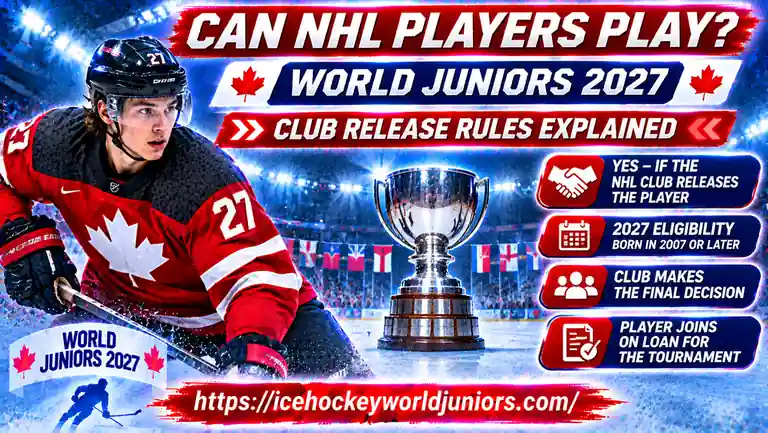
Yes, NHL Players can play at the World Juniors if NHL clubs agree to release them. Each club makes the final decision based on the player’s role. IIHF and national federations cannot overrule it. This guide covers eligibility, loans, the new AHL rule, and roster deadlines.
| Details | Info |
|---|---|
| Can Play | Yes, if the NHL club releases the player on loan |
| Who decides | The NHL club, not the IIHF or the federation |
| 2027 age eligibility | Born in 2007 or later |
| Citizenship | Citizen of the country he represents |
| New AHL rule | 19-year-old first-round CHL picks can play in the AHL in 2026-27 |
Who Is Eligible for the 2027 World Juniors?
The first entry rule for the 2027 WJC is age. Players must not have turned 20 before December 31, 2026. That means players must be born in 2007 or later. The second gateway is citizenship. Players must be citizens of the country they represent. He must also be under the jurisdiction of that country’s IIHF member association.
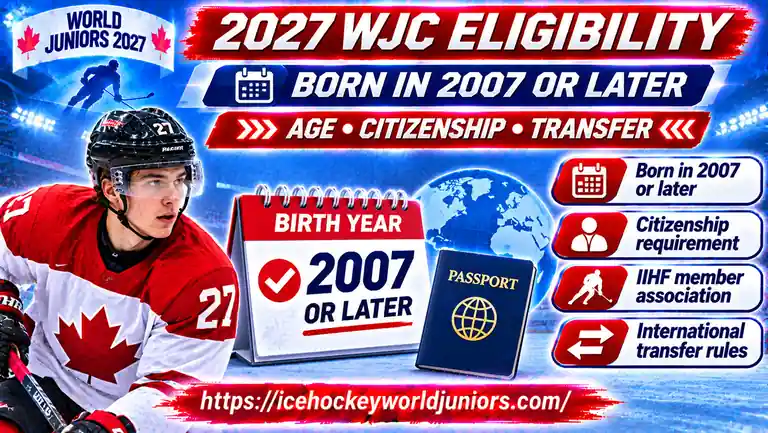
A player can switch national eligibility only once, and strict residency rules apply. A first-time player needs two straight seasons in the new country and a transfer card. A player with earlier IIHF experience needs four years there, plus citizenship of the new country.
| Case | Time in New Country | Transfer Card | Citizenship |
|---|---|---|---|
| First IIHF appearance (two-year case) | Two consecutive seasons, 16 months | Dated at least 16 months before the tournament | New citizenship |
| Played IIHF before (four-year case) | Four consecutive years | Dated at least four years before the tournament | Citizen of new country |
Read the full rules on the IIHF eligibility page and our rules and format page.
Can NHL Teams Release Players?
The NHL clubs decide whether to release him to his national team. Hockey Canada’s Scott Salmond said in 2023 that the answer depends on team health and contribution.
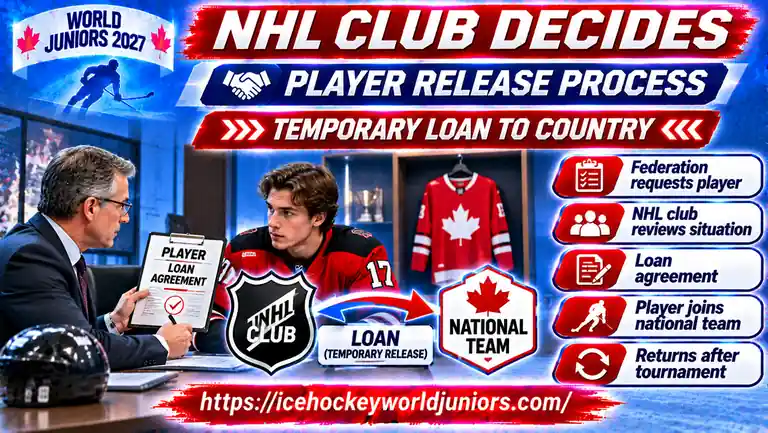
When a club agrees, the player joins his national team on loan. A loan is a temporary release that lets him play in the tournament. Afterward, his NHL club decides where he plays next, as Zayne Parekh’s 2026 loan showed.
How a release usually works:
Which Players Are Usually Released?
Clubs have usually released players who were injured or played small NHL roles. Established regulars are rarely loaned, according to Daily Faceoff and other reports. Each club still makes its own choice, so past results do not predict future ones.
| Year | Player | NHL Club | Result |
|---|---|---|---|
| 2026 | Michael Misa | San Jose Sharks | Loaned to Canada |
| 2026 | Harrison Brunicke | Pittsburgh Penguins | Loaned to Canada |
| 2026 | Zayne Parekh | Calgary Flames | Loaned to Canada |
| 2026 | Matthew Schaefer | New York Islanders | Not loaned, the club’s GM said |
| 2026 | Macklin Celebrini | San Jose Sharks | Could have been loaned, but was not |
Those were 2026 decisions only. They show how the pattern worked in practice, but they promise nothing about any player in 2027.
The 2026-27 AHL Rule for 19-Year-Olds
A recent change lets 19-year-old first-round CHL picks play in the AHL during the 2026-27 season. Before this change, those players had to return to junior hockey instead of turning professional early. The change came through an NHL-CHL agreement, and it reshapes the path for top junior talent.
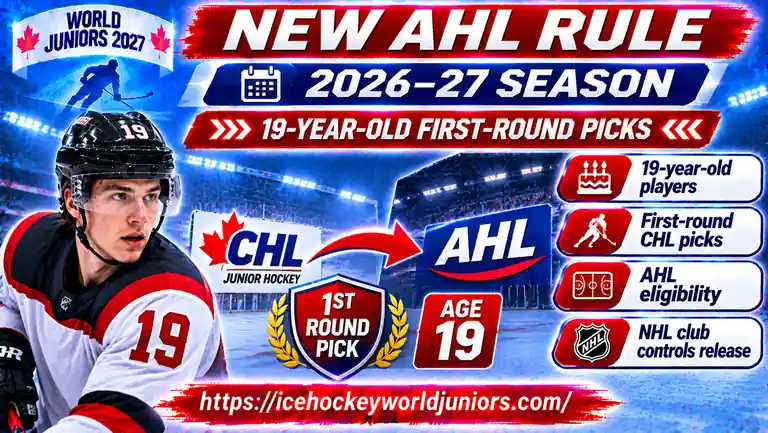
There is no per-team cap here, so several prospects from one club can move up together. AHL status doesn’t guarantee a World Juniors spot, though. An AHL player is a professional under contract, so his December availability follows the same club rule: the club decides.
See our roster hub for affected players, since names and club situations change through the season. The AHL route matters because more top prospects now play professional hockey during their World Juniors years, which gives clubs a bigger say in December.
AHL, NCAA, CHL and European Leagues
Players reach the World Juniors from several leagues, and each path has its own decision-maker. NHL and AHL players need permission from their NHL club to leave. Players in college, junior, and European leagues also need their own teams and federations to agree.
The league a player comes from changes who decides. This table sums it up:
| League | Under NHL Contract? | Who Decides |
|---|---|---|
| AHL | Yes | The club |
| NCAA | No | Player, school, federation |
| CHL | No, unless signed | Junior club, or NHL club if signed |
| European leagues | No | Player, European club, federation |
When Do Rosters Close?
In 2025, rosters closed on December 22. That date gave clubs and federations a firm deadline for loan talks, because a team cannot add players after its roster locks. Clubs and federations treat roster close as the real decision day, not the tournament start.
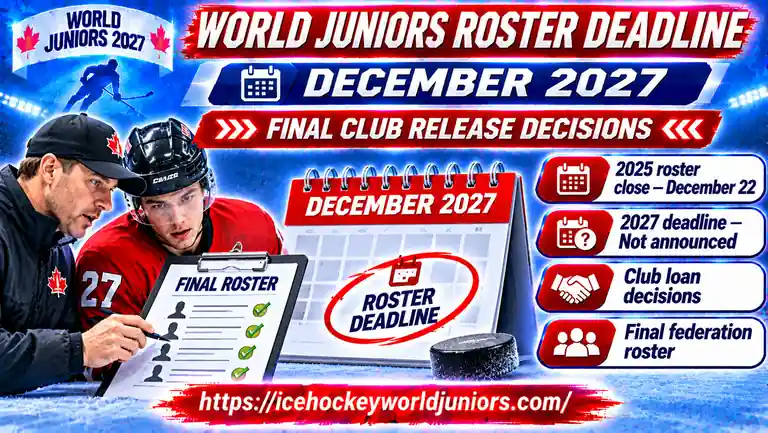
For 2027, no roster close date has been announced yet. Federation announcements in December will set the date, and those are the ones to trust. Until then, any December date you see elsewhere is only a guess, not a confirmed deadline.
See Team Canada for the projected roster.
Conclusion
NHL players can play at the World Juniors when their clubs agree to release them. The IIHF sets age and citizenship rules, but clubs control NHL and AHL availability.
December will answer the open questions, as clubs settle loans and federations name their final rosters. Until those announcements arrive, treat every 2027 name you read as a projection, not a promise. For how each federation runs its selection, see How World Juniors Teams Pick Their Rosters.